
Choosing a rowing machine: air resistance, magnetic or water?
Written by Erik Martens, co-founder of Fitnessdepot
Buying a rowing machine starts with one choice: the resistance system. Air resistance, magnetic resistance, or water determine how rowing feels, how much noise the machine makes, and what kind of training it is suitable for. Afterward, you look at the monitor, sturdiness, and the space you have.
Why rowing is such an efficient workout
Rowing works your legs, core, and arms in one movement, with low impact on your joints. You build both cardio and strength endurance. That is why you will find rowing machines in home gyms as well as CrossFit boxes, PT studios, and corporate gyms.
The three types of resistance
Air resistance
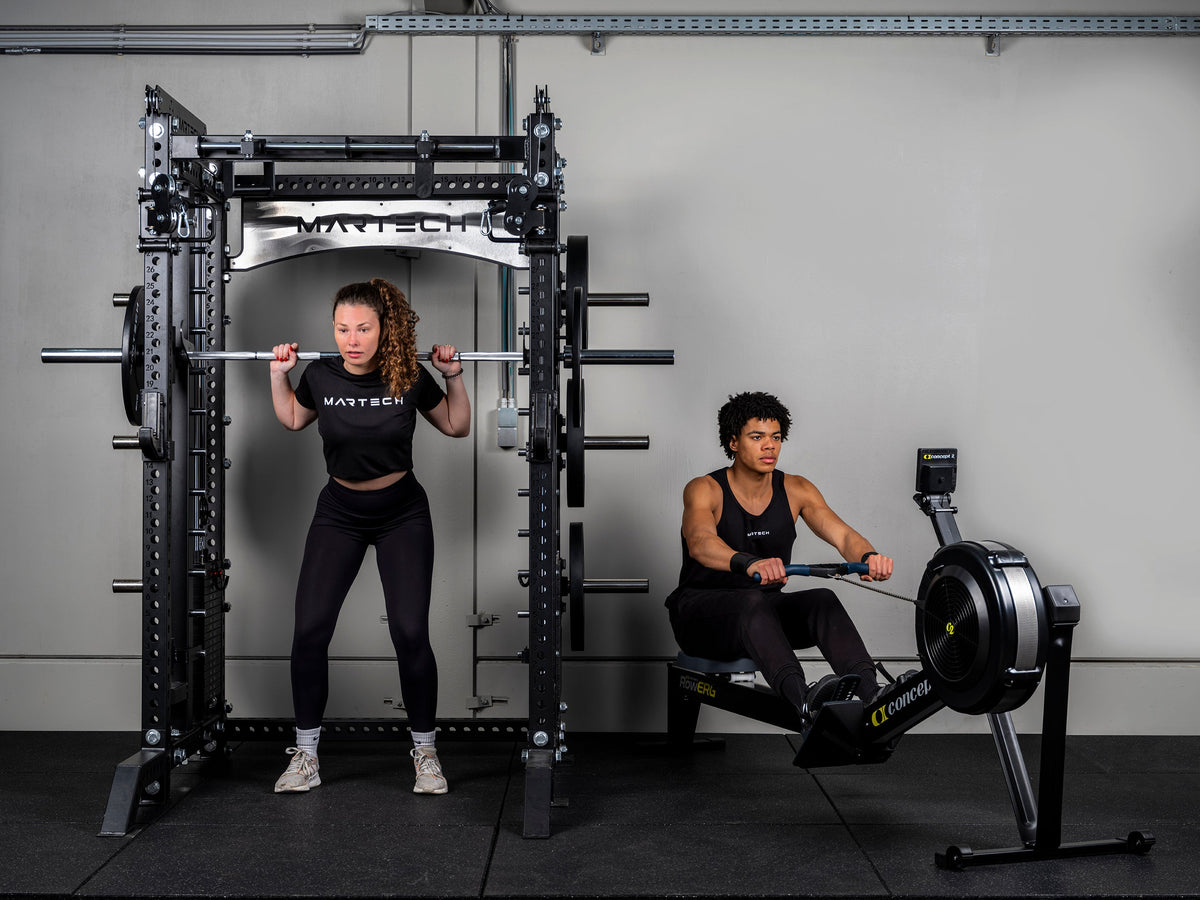
A flywheel with vanes provides resistance: the harder you pull, the heavier it gets. That feels natural and suits interval training and cardio workouts. Air rowers such as the Concept2 RowErg are the standard in fitness clubs and competitions. However, they do produce a bit more noise.
Magnetic resistance
A magnetic system regulates the resistance. The machine is quiet, and you set the resistance to a fixed level. Ideal if you live in an apartment or work out in the evening.
Water resistance
A water tank provides a smooth, fluid feel that closely mimics real rowing. Water models generally feature a fine finish, yet they take up more space and are heavier to move.
The monitor: to measure is to know
A quality monitor displays pace per 500 meters, strokes per minute, distance, and power. If you wish to compare your progress or train in a group, a monitor with reliable and comparable metrics is essential. This is why sports clubs often rely on the same brand and monitor.
Space and storage
A rowing machine is long. Account for the length of the equipment plus some clearance around it. Certain models can be stored upright or separated into two parts, which is convenient if you also use the room for other purposes. A protective mat beneath the unit helps safeguard your floor.
Which rowing machines do we offer and what do they cost?
- Air resistance: Concept2 RowErg (€ 1,195), Body-Solid Endurance R300 (€ 1,195), and DKN AR Pro (€ 1,195).
- Water resistance: DKN H2OAr (€1,495) and DKN WR 180 (€1,795).
- For intensive and professional use: DKN AR Pro X (€2,495) and Spirit CRW900 (€2,995).
Prices as shown in our webshop on October 30, 2026. Place a protective mat (€55.99) underneath to protect your floor.
What we see in practice
In corporate gyms, fitness clubs, and PT studios, customers almost always choose an air rower: robust, low maintenance, and measurable. At home, noise is more often a factor. If you are in doubt, try out both feels: the choice usually becomes clear quickly.
Frequently Asked Questions
Which rowing machine is best for home?
That depends on your workout and noise levels. For interval training and measurable results, choose an air rower; for quiet workouts, a magnetic rower.
Is rowing good for your back?
Rowing with proper technique strengthens your back and core muscles. Start slowly and pay attention to the correct sequence: legs, core, arms.
How much space do I need for a rowing machine?
Allow for the length of the machine plus some free space around it. Many models can be stored upright or put away after use.
Can I test a rowing machine?
Yes, rowing machines are ready to try out in our showroom in Ranst.
Read also: Buy treadmill · Setting up your home gym
View our range of rowing machines and ergometers or come test them in Ranst.