
Buying an exercise bike or spinning bike: which bike suits you?
Written by Erik Martens, co-founder of Fitnessdepot
Choose an exercise bike if you want to cycle upright, comfortably, and with programs to build your fitness; choose a spinning bike (indoor bike) if, as a cyclist or interval trainer, you are looking for a true racing position and a heavy, smooth flywheel. At Fitnessdepot, you can start with an exercise bike from € 595 and an indoor bike from € 1,395. In addition, there are two air resistance models that often cause confusion: the Concept2 BikeErg (€ 1,399) and the air bike (from € 995). Below you can read the difference for each type, who it is for, and what to look out for in practice.
Exercise bike, spinning bike, recumbent bike, BikeErg or air bike: what is the difference?
All these devices are bikes, but they train differently. The biggest difference lies in the seating position, the type of resistance, and what happens when you stop pedaling.
Exercise bike (upright bike)
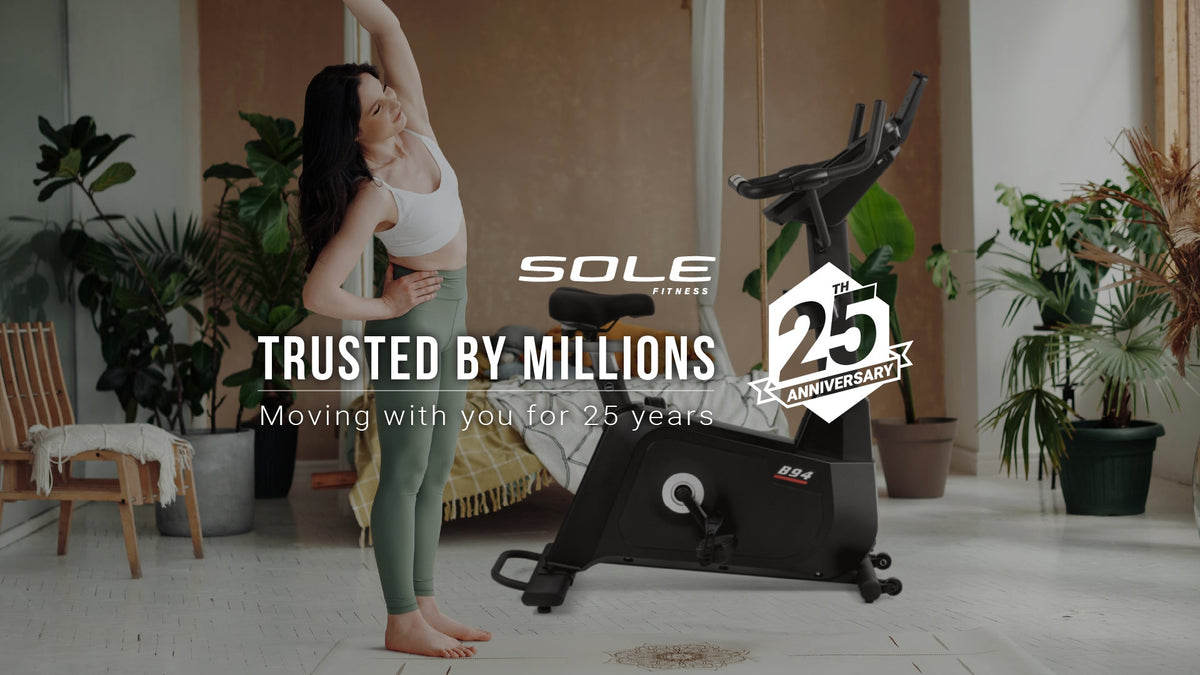
An exercise bike is a bike on which you sit upright, with a wide saddle and high handlebars. The resistance is magnetic and is set via the console in fixed levels. You choose a program, the bike adjusts the resistance, and you track your heart rate. This makes an exercise bike ideal for fitness, weight loss, and rehabilitation. For example, the Sole Fitness B74 has 20 resistance levels and 10 programs, 2 of which are heart rate controlled. The DKN AM-3i has a low step-through, which we often see with older users and after knee or hip surgery.
Spinning bike or indoor bike
A spinning bike is built like a racing bike: you sit leaned forward, you can adjust the saddle and handlebars in height and depth, and the pedals often have an SPD click. You usually control the resistance with a rotary knob, as with the Spirit Fitness SBC800 with its 360-degree rotary knob and a 16.8 kg flywheel. This type is designed for intervals, standing climbs, and long rides on Zwift. Please note: a heavy flywheel is not the only measure. The DKN Speedbike Pro X has a 3.5 kg aluminum flywheel and still rides smoothly thanks to the belt drive. Therefore, always try it out yourself.
Recumbent bike
On a recumbent bike, you sit with a backrest and pedal forward. This relieves your lower back and provides stability in case of balance problems. The Sole Fitness R92 has a 9 kg flywheel and 20 resistance levels.
BikeErg: the bike with air resistance and freewheel
The Concept2 BikeErg works with a fan flywheel: the harder you pedal, the more air is moved, and the heavier it gets. There are no levels. With the damper on the side, you choose the feel, light and fast or heavy and slow, just like gears. The major difference from a spinning bike is the clutch mechanism: when you stop pedaling, the flywheel keeps spinning without pulling your pedals along. This allows you to coast just like outdoors. The PM5 monitor provides watts, cadence, and pace that are comparable to any other BikeErg. That is why the BikeErg can be found in many CrossFit boxes alongside the RowErg and SkiErg.
Air bike: arms and legs simultaneously
An air bike features moving arms and a large fan at the front. You push and pull with your arms while pedaling, so your entire body is engaged. The resistance increases with your effort, with no upper limit. This makes an air bike the ultimate machine for short, hard intervals. The Spirit Fitness AB900+ has a 68.6 cm fan and supports users up to 200 kg. The DKN AB140 is the entry-level model. Long, leisurely rides are not suited for this: an exercise bike or indoor bike is more comfortable for that.
What should you look out for when choosing?
1. Your goal determines the type
If you want to get fitter or lose weight with a fixed schedule, an exercise bike with programs is the easiest option. If you are training for the cycling season or riding on Zwift, you will want an indoor bike with a racing position and Bluetooth. If you are looking for HIIT or CrossFit fitness, you will end up with the BikeErg or an air bike.
2. Adjustment and body height
Check whether the saddle and handlebars are adjustable in height and depth. On the Sole B74, you adjust the saddle in both directions, and on the SBC800, the handlebars as well. If two people with a significant height difference train on the same bike, they both need to sit correctly, which is only possible if the horizontal distance is also adjustable.
3. Resistance and measurement
If you want to train by power output, check whether the bike displays watts. The DKN X-Motion II has a watt program from 10 to 500 watts and 32 automatic levels. The DKN Speedbike Pro-2 works with stepless magnetic resistance, without fixed steps.
4. Maximum user weight
This varies considerably: 130 kg for the Sole B74, 150 kg for the Spirit XBU55, and 165 kg for the Spirit SBC800. Leave a margin. A bike used close to its limit will wear out faster.
5. Noise, power, and location
Magnetic bikes with belt drive are quiet enough for an apartment. An air bike and BikeErg produce wind noise and blow air, which is not always suitable for a bedroom next to the children's room. For every bike, make sure to allow for a free zone around the machine to get on and off. During standing sprints on an indoor bike, you can feel vibrations in a wooden floor: a rubber surface helps, see our guide on choosing a rubber sports floor.
Prices: how much does an exercise bike or spinning bike cost?
These are the price categories in our range, including VAT, as of October 30, 2026.
- Entry-level (€ 595 to € 1,000): the DKN AM-3i at € 595, the Sole Fitness B74 at € 950, and the DKN AB140 air bike at € 995.
- Mid-range (€ 1,000 to € 1,800): the Spirit XBU55 at € 1,195, the Sole B94 at € 1,345, the DKN X-Motion II at € 1,395, the Concept2 BikeErg at € 1,399, the DKN Speedbike Pro-2 at € 1,495, and the Sole SB900 at € 1,695.
- Higher range (€ 1,800 to € 3,000): the Spirit SBC800 at € 2,295, the DKN Speedbike Pro X with a 21.5-inch touchscreen at € 2,495, and the DKN Upright Bike Pro at € 2,995.
- Professional (starting from € 2,395): the commercial exercise bikes from Spirit, ranging from the CU800+ at € 2,395 to the CU1000ENT at € 6,995, for corporate fitness, hotels, and physiotherapy practices.
Comparison table: popular bikes side by side
| Model | Type | Price | Flywheel and resistance | Max. user weight |
|---|---|---|---|---|
| Sole Fitness B74 | Exercise bike | € 950 | 8.16 kg, 20 electromagnetic levels | 130 kg |
| Spirit Fitness XBU55 | Exercise bike | € 1.195 | 13.6 kg, 20 magnetic levels | 150 kg |
| Sole Fitness B94 | Exercise bike | € 1.345 | 9 kg, 20 magnetic levels | 135 kg |
| DKN Speedbike Pro-2 | Indoor bike | € 1.495 | 8.5 kg aluminium, stepless magnetic | 150 kg |
| Sole Fitness SB900 | Indoor bike | € 1.695 | 22 kg, magnetic | 135 kg |
| Spirit Fitness SBC800 | Indoor bike | € 2.295 | 16.8 kg, magnetic with rotary knob | 165 kg |
| DKN AB140 | Air bike | € 995 | Air resistance, arms and legs | 135 kg |
| Spirit Fitness AB900+ | Air bike | € 1.795 | 68.6 cm fan, arms and legs | 200 kg |
What we see during installations
The most common mistake is buying a spinning bike for someone who actually just wants to cycle at a leisurely pace. After two weeks of sitting hunched over on a narrow saddle, the bike ends up in the corner. Conversely, cyclists quickly find an exercise bike too bulky. A second point: consider the power supply. Many exercise bikes and indoor bikes with a console or touchscreen require a power outlet, whereas the Spirit AB900+ runs on your own pedaling power and 4 AA batteries. Therefore, check where the nearest power outlet is before having the bike installed.
Also read: if you are hesitating between cycling and rowing, read our guide on rowing machines. If you want a joint-friendly workout for your whole body, check out the buying guide for cross trainers. All air resistance equipment can be found in the SkiErgs and air bikes collection.
Frequently Asked Questions
What is the difference between an exercise bike and a spinning bike?
On an exercise bike, you sit upright and adjust the resistance via programs on the console; on a spinning bike, you sit in a racing position and control the resistance yourself, usually with a rotary knob. An exercise bike is designed for fitness and comfort, while a spinning bike is meant for intense intervals and cycling training.
Is a BikeErg the same as a spinning bike?
No: the Concept2 BikeErg works with air resistance and a freewheel, so the pedals do not keep turning when you stop, whereas a classic spinning bike has magnetic resistance. As a result, the BikeErg feels more like cycling outdoors and is popular for interval training and CrossFit.
How much does a good exercise bike cost?
A solid home exercise bike costs between € 950 and € 1,345 with us, such as the Sole B74, Spirit XBU55, and Sole B94. Entry-level models start from € 595 with the DKN AM-3i, and commercial models for corporate fitness begin at € 2,395.
Is an air bike suitable for weight loss?
An air bike burns a lot of energy in a short time because your arms and legs work together, but the workout is hard and intense. Anyone who prefers long and steady training will find it easier to keep going on an exercise bike.
Can I use Zwift with an exercise bike?
You can if the bike connects via Bluetooth to FTMS apps, such as the Spirit XBU55, or is Zwift-compatible, such as the DKN Speedbike Pro-2 and the Sole SB900.
How much noise does an indoor bike make?
An indoor bike with magnetic resistance and belt drive, such as the DKN Speedbike Pro-2 or the Spirit SBC800, is quiet enough for an apartment. Air-driven equipment like an air bike or BikeErg produces noticeably more wind noise.
Ready to choose? View all exercise bikes and indoor bikes or schedule a showroom visit. Let us know which models you would like to test when making your appointment, and we will confirm what is ready for you.